Showing posts with label Infantry. Show all posts

Saturday, December 24, 2016

Event: Fort Steilacoom Christmas.

December 10th was very busy day for the 4th.  After the ceremony for Mr. and Mrs. Powers, we participated in Fort Steilacoom's Christmas Candlelight Tour.  The year was 1859 and, with much of the 4th Infantry still up on San Juan Island for the Pig War, the 9th garrisoned the fort. Col. Casey, however, had recently returned to Steilacoom, and those in residence found time for some holiday observances.  

4th US Fort Steilacoom Christmas dance
Yours truly called the dance figures for
a fine group of young officers and ladies.

4th US Fort Steilacoom Christmas officers' family
Mr. Miller was seen enjoying the company of Col. and Mrs. Casey.
He seems to have evaded the photographer.

4th US Fort Steilacoom Christmas officers
Captain Jones visits other officers in the bachelors' quarters.

4th US Fort Steilacoom Christmas soldiers
Mr. Talbot and the boys are finally allowed indoors,
after a long evening on sentry duty.


[The editress again apologizes for the tardiness of this piece.  The festive season has been unfortunately busy.]

Monday, July 4, 2016

Event: Color Guard Ceremony and 4th of July Parade

The 4th had a rather busy Indepedence Day, with a color guard ceremony in Puyallup, two parades (DuPont and Steilacoom), and a potluck lunch at Fort Steilacoom.

4th US Reenactors at 4th of July Flag Ceremony
Members serve as a color guard during a
4th of July flag ceremony in Puyallup.
4th US Reenactors Dupont 4th of July Parade 2016
Waiting for the Dupont parade to start.


Thursday, June 23, 2016

Event: Battle of Fullbright Park (Union Gap, WA)

The second WCWA reenactment of the season took place last weekend at Union Gap's Fullbright Park.  Captain Jones reports that the 4th "made numbers", ie, had a least 8 pre-registered soldiers participate in the event.  We were also fortunate to be joined by Mr. Spellman of the 12th US, and by a new recruit. The Union Soldiers' Aid Society was on-hand to provide refreshments.

Under the leadership of Captain Jones, Sergeants Strand & Hicks, and Corporal Franks, the 4th acquitted themselves with courage valor, most notably holding off the entire rebel line to permit a flank maneuver by the volunteers.  Unfortunately, this was not enough to prevent a rebel raid on the union camp. [Note to the War Department: consider recruiting Miss D. and her frying pan for special defense objectives.]

Special thanks to Messrs. Strand and Mosby for transporting the company trailor, Mr. Strand for providing the mess, and Mr. & Mrs. Talbott for securing USAS supplies.  The young men of the 4th, notably Messrs. Franks, Franks, and Walker, worked very hard to set up and strike camp, and were in regular attendance on the ladies, as best their duties would permit.

The event was documented here (including aerial shots of the battles).  As the blogmistress's camera malfunctioned, pictures are from Sgt. Hicks.

2016 Union Gap 4th US USAS
USAS Sewing Circle

2016 Union Gap 4th US
Pre-Event Cartridge-Making Party
4th US 2016 Union Gap Reenactment
Company Drill


Monday, June 13, 2016

Event: School of the Regular

Over the weekend, the 4th held it's annual "school of the regular" training retreat.  We have to look better than the volunteers, after all!  

Mr. Strand organized the weekend at historic Fort Flagler.  Mrs. Strand, with her usual efficiency, ran the mess.  Recruiting Sergeant Hicks reported a satisfactory event, so it's safe to assume that the troops are in fine form for the upcoming engagements at Union Gap. 

4th US Reenactors School of the Regular
Better pay attention to General Grant.  There might be a quiz.

Captain Jones instructs the men.
Photographs by John Strand.

Tuesday, April 19, 2016

Hail, Columbia!

Frontispiece to The Union Memorial (1861)

In addition to being the "unofficial national song" of the 1860s, Hail, Columbia is also the battle cry of the WCWA's "Army of the Columbia."  Here are the lyrics, according to The Book of Popular Songs (1860):
HAIL Columbia! happy land!
Hail ye heroes! heaven born band!
    Who fought and bled in freedom's cause,
    Who fought and bled in freedom's cause,
And when the storm of war was gone,
Enjoyed the peace your valor won.
    Let independence be our boast,
    Ever mindful what it cost;
    Ever grateful for the prize,
    Let its altar reach the skies.
         Firm--united--let us be,
         Rallying round our liberty;
         As a band of brothers join'd
         Peace and safety we shall find.  
Immortal patriots! rise once more;
Defend your rights, defend your shore;
    Let no rude foe, with impious hand,
    Let no rude foe, with impious hand,
Invade the shrine where sacred lies,
Of toil and blood the well-earn'd prize.
     While offering peace sincere and just
      In heaven we place a manly trust,
      That truth and justice will prevail,
      And every scheme of bondage fail.
            Firm--united, &c.  
Sound, sound, the trump of fame!
Let Washington's great name,
      Ring through the world with loud applause,
      Ring through the world with loud applause,
Let every clime to freedom dear,
Listen with a joyful ear;
     With equal skill, and god-like power
      He govern'd in the fearful hour
      Of horrid war; or guides with ease,
      The happier times of honest peace.
            Firm--united, &c. 
For the tune, there's sheet music from 1857 (and an 1861 piano medley); you can also listen to recordings on youtube.

Wednesday, September 9, 2015

Event: Fort Worden Living History

The 4th US attended a new event Labor Day weekend--a 3-day, multi-era living history at Fort Worden State Park.  Joining us in the 1860s were the USS Tahoma Navy, the 1st Texas Infantry, and the Confederate Engineering Corps.  Other groups representing WWI, WWII, and diverse army vehicles were also present.  The Civil War component was organized by Liz and John Strand.

The event was a interesting on multiple levels.  The historic fort offered an excellent parade ground for camping and skirmishes, as well as slightly-post-period historic housing with some modern amenities.  The mixed-era event attracted an exciting mix of knowledgeable and novice visitors, while the more intimate scale allows members of different companies (and time periods!) a chance to meet each other.  There were a number of weddings also scheduled in the park that weekend, and a joint Union/Confederate effort enabled one of them to feature a very special saber display--with less than 15 minutes notice.

Evening programming in the 1940s USO hall gave everyone a chance to relax and socialize: it included two period dances, a round of Victorian parlor games, and a birthday party for young Mr. Walker.  I'm sure none of us will easily forget Mr. Talbott (as General Lee) imitating a rooster for the amusement of the company.

The Confederates hold their position during a skirmish.
Captain Jones addresses the troops
A firing demonstration.
Union infantry (4th US) in camp.
The USS Tahoma's "Land Ship" intrigued visitors.
The navy in action.
Navy encampment on the parade ground;
Fort Worden's late Victorian officers' quarters appear in the background
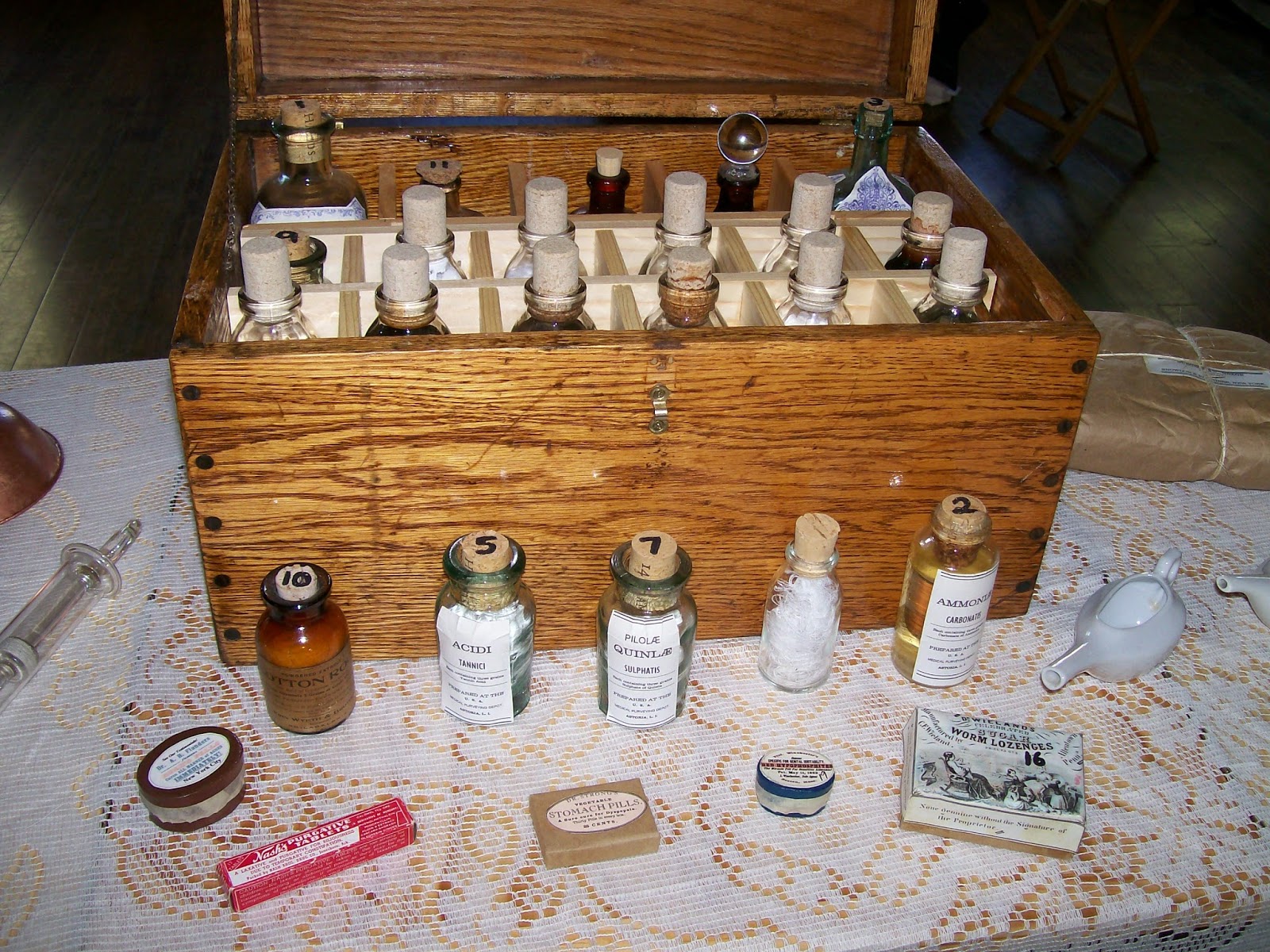
The field hospital enjoyed more permanent surroundings than usual.
Medicine chest on display in the field hospital.
Nurse Keyes comforts a mourner.
The civilian display also included an extensive fashion section.
Mrs. Talbot battled yellow jackets at the USAS tent to keep
everyone supplied with lemonade, pickles and cookies.
The Virginia Reel was popular during Saturday evening's dance.
The Broken Dreams provided live music.
Having our image struck.
Apologies to the Confederate Engineers and the 1st Texas Infantry for the paucity of camp photos--the author's camera didn't make it out of civilian land until after our friends in gray had to pack up Monday.

Tuesday, August 11, 2015

Beginning First Person Interpretation

For those interested in trying it out, a few thoughts on first person living history:


First person interpretation is pretending to be a person from the past—and not alluding to the fact that you are a twenty-first century person in funny clothes talking about the past.

We call it "first person" because you are using the grammatical first person ("I/me/my, we/us/our") to convey your information. For example:

First person: "I fear prices will keep rising as long as the blockade lasts."
"We are making a quilt for the hospital."

Second person: "If you lived here in 1855, you'd be sharing this one room with all of your siblings."

Third person: "He wrote most of his letters at this desk."
"The soldiers often complained of inadequate rations."
"They didn't have electricity."

In first person, the speaker is placing himself or herself in the past. In second, the person being spoken to is placed in the past. In third person, the person(s) being spoken about is(are) placed in the past.

How to do it

In short, start using "I" statements. Everything you already know and share about the period is still relevant—you're merely changing how you present the information.

There are two main groups of people you'll interact with in first person: other reenactors (in first person), and the public (people not in first person).  Most of the techniques are relevant to both, though the later group in particular may need some prompting to understand that you are from the past--in first person rather than in third.  You'll also get the occasional corny attempt at humor ("Where's the TV?"; Waves cell phone--"Have you ever seen one of these?"); I prefer to handle these with a polite smile, "I am unfamiliar with that term", and getting back on topic.

It's fun to do first-person with other reenactors, and you don't need to plan out elaborate scenarios and scripts. At the bare minimum, all you need to have worked out is that you're in the same place—knowing where and when you are.

When are you? Where are you? 
Some events make this clear in advance: the event and everyone at it is in Gettyburg, PA July 1-3, 1863, for example. Others events are less well-defined, in which case you need to either work out your location/date or avoid using specific (time-sensitive) details that might not fit. Discussing the upcoming presidential election is an excellent topic for the summer of 1864, but makes less sense if your conversation partner thinks its the spring of 1861 and was just about to bring up their thoughts on the recently-past election. Complaining about blockade-caused shortages as a Georgian in 1863 is great...that is, if you're not talking to a northern shop-keeper who's noticed no such hardships, or to your southern neighbor of '61, who's still anticipating a quick war after First Manassas.

Dropping the year into your conversation can also help orient the public to your first-person conversation.  Ie, "Look at our new cook stove. Poor Thornhill was actually cooking over an open hearth until it arrived last year--imagine cooking on a hearth in 1854! But then, with the expense of shipping it around Cape Horn, we're quite lucky to have it at all."

Who are you?
Unless you're at a planned event where you share a backstory with other people--who are portraying your close friends, family and neighbors--this sort of background information is largely for your own benefit. It's both very important (your persona's social, political and geographical background informs everything you say/think/do in character), and not very important (unless you bring it up, no one will ever ask about your character's childhood home, or deceased relatives, or favorite food). To start, work out the very basic concepts such as your name, your relationships to other people present at the event (if any), and what you're doing there. You can build a more elaborate persona as you feel comfortable with it.

Introduce yourself!
Use a period form of introduction to do so, and you're already in first person.
(I've put forms of introduction and address in a separate post).

Keep Talking, Keep Trying
Venture an opinion: on the weather, on the shop-keeper's prices, on that bonnet you saw in Godey's, on the President's recent proclamation, on the war, on a patent medicine you tried. Ask a question, How's your health? Where's a good place to buy shoes? Have you seen my husband pass this way? What do you think of the military occupation/weather/recent political event/lastest fashion fad? Have you seen the latest edition of Harper's? Tell an amusing anecdote. Offer advice. Anticipate a coming event: the ball tonight, the end of the war, your sweetheart's next letter. Discuss your day/the children/that new Dickens novel you're reading. Attempt to recruit your conversation partner into some future project: planning a charity ball, supporting a political candidate, investing in your land speculation scheme.

I find first-person opportunities provide excellent fodder for your next first-person encounter: discussing the last ball over dinner, or recounting the time that the maid tripped and invented "flying aspic".  If you interact with the same people, you'll also start to develop shared stories and backgrounds which can be referenced on future occasions.

Period literature can make a pleasant topic of discussion. Incidents and opinions found in period diaries, letters, and travelogues can also be adapted for personal use: for example, one lady at Nisqually last year portrayed a character who had crossed Panama by mule, and regaled us with stories of the trip. Avoid taking well-known incidents and putting yourself into them—unless you actually are portraying one of the Pinkerton agents who thwarted the first assassination attempt against Lincoln (or whatever the particular situation is).

Do Something/ Start Conversations
This applies to in-character interactions as well, but it's vital to conversations with the "public". Visitors don't always know that you're in character, and might not know how to approach you. even if they do.  Doing something provides one way to break the ice—the public can ask questions about it, or you can greet them and volunteer information about your activity.

This is also great for you, as it focuses the sort of questions you'll be getting. Even if you don't feel like you know everything a person from you period would know, you can research a narrow topic until you feel comfortable with it (most people aren't looking for a dissertation). So, read up on period laundry methods if you're washing clothes. Consider where you bought/procured the food you're cooking with. Know who you're writing that letter to, and be able to name the equipment you're using to write it.  Someone who sees you cooking is more likely to ask you a question or two about your menu/tools/where you acquired your ingredients--ie, the questions you're prepared for--than to grill you for minutiae on politics, or transportation, or fashion.  

Then, when a visitor comes up to you, start talking to them. I like to start with a "good morning", or "good afternoon" ("hello" seems to be uncommon in 1860s, and "hi" is right out). The visitor will often ask when I'm making/doing, and I can explain that I'm tatting/rolling gingerbread/sewing a skirt. If they don't ask another question, I can offer a few more details (tatting is a sort of lace-making; I'm using it to make a decorative trim for a chemise, which is a sort of undershirt that keeps my other clothing nice). Eventually, the visitor will either start helping carry the conversation, or they will take their leave. Either way, you've just taught them something. And you did it in first person!

Admit That You Don't Know
This where I most often end up breaking character. Someone asks a question, and you don't know the answer. The cardinal rule of living history and museum interpretation is do not make it up.* So, don't. Own up to your ignorance. Offer what relevant information you do have. If it's something that can be handled in character, great—after all, there are things your character wouldn't know. If that's not the case, ie, the question is one that your character should be able to answer, then you need make it clear that you're breaking character when you say no. And later, you can try to find the correct answer for next time.

Some ways to answer in character:

"I've no idea what the clerks are paid, but it's surely more than I earn picking potatoes. Are you looking for a position?"

"My maid handles the laundry. I don't know how she gets those ink spots out, but my undersleeves always come back neat and clean. Nevertheless, I've started wearing sleeve protectors when handling a large correspondence."

"How old's the wheat? Well, I planted it late spring, and it's ready to harvest now, and that's my main concern." [If the questioner persists in asking about the dates for the wheat variety, I'd break character to say that I don't know.]

To gracefully demur: "Actually, I don't know how much the seasonal workers were paid, but we're continuing to research the topic.  I do know that servants in this area earned around $X per month, and expect that unskilled labor was paid at a similar level."

Keep Learning
The more you know, the more... Questions you can answer. Conversations you can enjoy. Interesting scenarios you can devise. Different personas you can try.

The more accurately you can present the past to others.

Some resources for developing more advanced personas and research:
Resources from the Atlantic Guard Soldiers' Aid Society
Linda Trent's "Creating Believable and Sustainable Characters"
First Person Character Worksheet
Discussion: Staying in First Person
In the Right Mind part I
In the Right Mind part II

To Re-Cap

First person interpretation is pretending to be someone from the past—using "I" and "we" in your conversations.

When doing first person with other reenactors:
  1. Know who, where and when you are
  2. Introduce yourself
  3. Keep trying
  4. Continue to learn

When doing first person interactions with the public:
  1. Know who, where and when you are
  2. Do something
  3. Start conversations
  4. Admit when you don't know the answer (stay in character if you can)
  5. Continue to learn

*To clarify, yes, you are lying: first person is a mutually-agreed-upon-fantasy, in which everyone knows that you were not actually born in 18XX, but both you and the visitors are pretending otherwise. All liberties need to be confined to this 'mutual fantasy' dressing and not get mixed into the history itself. We're here to educate, and inventing 'facts' does a disservice to everyone (including future generations of interpreters who get to keep disabusing returning visitors and their grandchildren of stories—that have no basis in fact—invented by previous living historians). The public is are trusting you to tell them what the past was like, and are granting you license in the presentation. So, go ahead and relate the funny privy story you read (in a period source) as though it happened to you, or use your own experience with the horsehair sofa as a warning about sitting carefully (happened while using period items in the prescribed way), but don't invent something out of wholecloth and pass it off as history.

Friday, June 5, 2015

Research Resources: Period Paintings

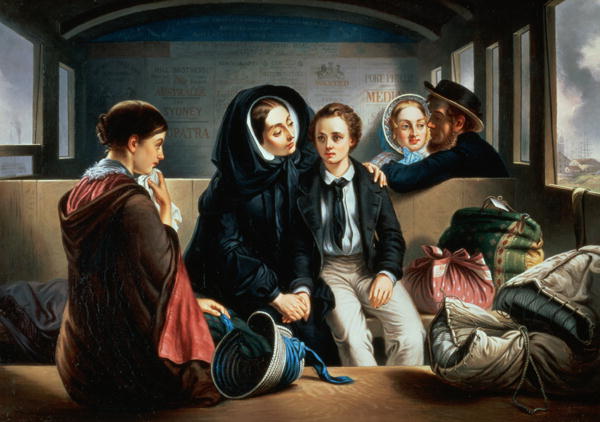
Another tool to train the eye: contemporary paintings.  These can be a fascinating resource for material culture and clothing in context--as well as activities and attitudes of the time.

For our military men, what fun details can you spot in this 1863 painting?
"Home Sweet Home", c. 1863, Winslow Homer
"The War Spirit at Home: Celebrating the Battle of Vicksburg", Lilly Martin Spencer, 1866
Children playing, mom in her wrapper with a newspaper and the baby, an apron-wearing servant wiping the dishes.  Note the children's headgear as they play soldiers: a folded paper hat, an actual kepi, and I-don't-know-what on the youngest's head.  In the background, a draped table and what may be breakfast dishes.
"Second Class: The Parting", revised version 1855, by A. Solomon
There's all sorts of fun material culture details here.  The hand luggage includes a carpet bag with a card on the handle, some red patterned cloth (a shawl?) tied into a bundle, and a stouter cloth pack tied with cords.  The young woman has taken off her straw bonnet (unlined, no frill, straw curtain), but still wears her cloak, with the hood off; the mother wears an attached hood drawn over her bonnet, while the third lady has kept her bonnet on.  The young man wears no head covering, while the older one in the background seems to have a two-toned hat--a trick of the light? a straw hat with a very broad black hatband? a black hat with some sort of facing on the underside of the brim? a hat with brim and crown of different materials?  There's also the characteristics of the train itself--the wooden benches, the open car, advertisements on the wall (contrast to the "First Class", by the same artist, whose occupants enjoy separated, upholstered seats in a private carriage).

"Changing Homes" by G. E. Hicks, 1862 (British)
So much detail! Blinds and layered curtains on the windows, the identical chandeliers in the two parlors, which are divided by curtains  The men have removed their hats, while the women (including the bride!) continue to wear bonnets, save for an old woman in a cap and a young woman bare-headed.  Three young girls (bridesmaids?) wear identical striped white dresses with cloaks--on one, you can see a pink waist sash with scalloped edges.

Some Artists to Look Out For
William Powell Frith, British genre painter, 19th century
William Hemsley, British genre painter, 19th century, many paintings of rural children
Winslow Homer, American, 1860s-1900s, slice of life images, include soldiers and leisure activities
Abraham Solomon, a British painter active in the 1840s-1860s; historic and contemporary subjects
Lily Martin Spencer, American genre painter, 1850s-1860s, focused on women and children.
Francis Xavier Winterhalter, German, 1830s-1870s, famous for portraits of royalty.

Other Collections
The Atheneum (you can search by year as well as artist!)
19th Century Genre Paintings on Wikipedia
The Victorian and Albert Museum (use advanced search to find paintings and narrow the year range)
The Metropolitan Museum of Art (ditto)

Wednesday, April 1, 2015

Rounding Out Your Impression: Primary Sources

Glamour: 1865 (from Peterson's Magazine, January)
One benefit of reenacting 150(+) years in the past, is that the books, magazine, pamphlets, and newspapers of the time are in the public domain.  Yes, you can actually read the same papers that your ancestors got their news, humor, and fashion advice from.  Why not pick up a copy of Harper's and find some truly dreadful Victorian jokes to share around the next campfire?  Or regale your comrades with Mr. Foster's hit new song?

Here are some of the resources I've found useful for tracking down written primary sources from the 1850s-1860s.

The Library of Congress: It's not always the easiest to navigate when looking for a particular title, but they have tons of resources which are fun to browse.

Google Books (Advanced Search): One of the easiest ways to search for a particular topic is using this advanced search.  Enter your subject or title in the "all the words" bar ("leather work", "etiquette", "Godey's", "agriculture", "housework", etc.), check "full view only" (to get things you can read for free on-line) and set the year range (say 1855-1870).  Advanced tips: the "more editions" button can get you from the 1861 set of a magazine, to all the available years; compound words are sometimes spelled differently in the period: ie, "sunbonnet", "sun-bonnet", "sun bonnet"--if one search yields no hits, try varying the spelling.

Internet Archive: Less useful for subject-browsing that Google or LOC, Internet Archive can track down specific titles which the others may not have.  It's particularly nice for finding a whole year's worth of a magazine or newspaper (many period periodicals were published in bound volumes after the initial run of issues, and these are often what have survived in libraries and ended up posted on-line).

Project Gutenberg: If you know the title or author of a period book, you can search here: e-books, all public domain, and all free.  Unfortunately, I've never found a 'sort/exclude by date' option, so it's not easy to browse for specifically 1860s titles.

Harper's Weekly (and here): Probably the most famous of the national newspapers in the 1860s. Don't have time to read it all?  Check out the Cartoon of the Day.

And some of my specific favorites:

Links to Etiquette, Advice, and Household Books

Links to Literature and Sheet Music including the excellent Levy Sheet Music Collection from Johns Hopkins (allows you to search by title, subject, or instrumentation, and to limit the year range).

Links to Textbooks

Added 8/4/15: The British Library has an extensive collection of historic images from the 17th-19th centuries on their flicker account.  And they're all public domain!

Luminous-Lint has historic photographs (and information on the history of photography).

Saturday, March 28, 2015

Event: Retsil Veterans' Home Living History


Today, members of the 4th US presented a living history demonstration at the Retsil Veterans' home. As the blogmistress was unable to attend, details are scarce.  Nonetheless, we can all agree, I'm sure, that with this fine looking group of regulars on hand, the Union cause is sure to prosper.

Saturday, January 31, 2015

Event: Puyallup Antique Show

Today, members of the 4th US attended the Antique Show at the State Fair grounds, where we charmed everyone with our wit, knowledge, and strange attire.  Highlights of the outing included a variety of questions from many interested passers-by; meeting our newest member, Tom (Hi, Tom!); and Erin's surprisingly popular blue willow plate. Reliable sources (possibly Captain Jones) report that the firing demonstration set off two car alarms with a mere three volleys.  Undoubtedly, this record will be tested many times over the upcoming season. You can do it, boys!

Honorable mentions go out to the new USAS slogan ("Join the civilians, we have lemonade!"), and Sgt. Hick's beautiful improvised table coverings.  There's apparently more than one use for a pup tent...


Thursday, January 29, 2015

Welcome

The 2015 Reenacting Season is approaching, and we're all getting very excited about it.  The WCWA has some cool new events starting this year--including a nice close reenactment at Snoqualmie, hosted by our neighbors in the 20th Maine, and a new living history event at beautiful Fort Worden, hosted by our own John & Liz.

You can learn more about the 4th US Reenactors on our About Page.  To see what kinds of activities we're doing, check out the calendar.

If you're interested in reenacting in Washington, drop a note to our Recruiting Sergeant, send a message to me, or check out the WCWA website.  Fun fact: you don't have to live in Washington to join the WCWA (Hi, Company G!).

Reenacting: Fun for the Whole Family